
Somewhere in every weekend golfer's head sits the same quiet lie: that your putting is fine, it is the rest of your game that is broken. I told myself that until the weekly pairing at my club kept pointing out that I was three-putting holes the other guys were two-putting. I am a 13-handicap who carries the bag on a hilly course and whose Sunday football runs late, so when a golfer friend mentioned the SKLZ Putting Green, a flat practice strip that fit in my spare room, it sounded like the answer. So I bought one, set it up, and I have rolled literally thousands of putts on it.
Here is the honest part that most glowing reviews will not say up front. The SKLZ putting green is not a miracle. It will not teach you to read a sloping green, it will not fix a path that is wildly offline, and it rolls faster and flatter than any course surface you will stand on. What it does do, quietly and reliably, is take a weak part of your game and turn it into the part you stop dreading. That is a real and valuable thing, and it is the thing I want to talk honestly about here.
The Quick Verdict
For a mid-handicap golfer who wants a cheap, flat, no-fuss surface for nightly stroke and speed drills, the SKLZ Putting Green is the highest-return practice tool I own. Just know it fixes your stroke, not your green reading.
Amazon Check Today's Price →Roll a few hundred putts a week and watch the round improve
If your three-putts are costing you strokes every weekend, this is the cheapest rep-count you can add to your week. I hit mine every evening after work.
Amazon Check Today's Price on Amazon →How I've Used It
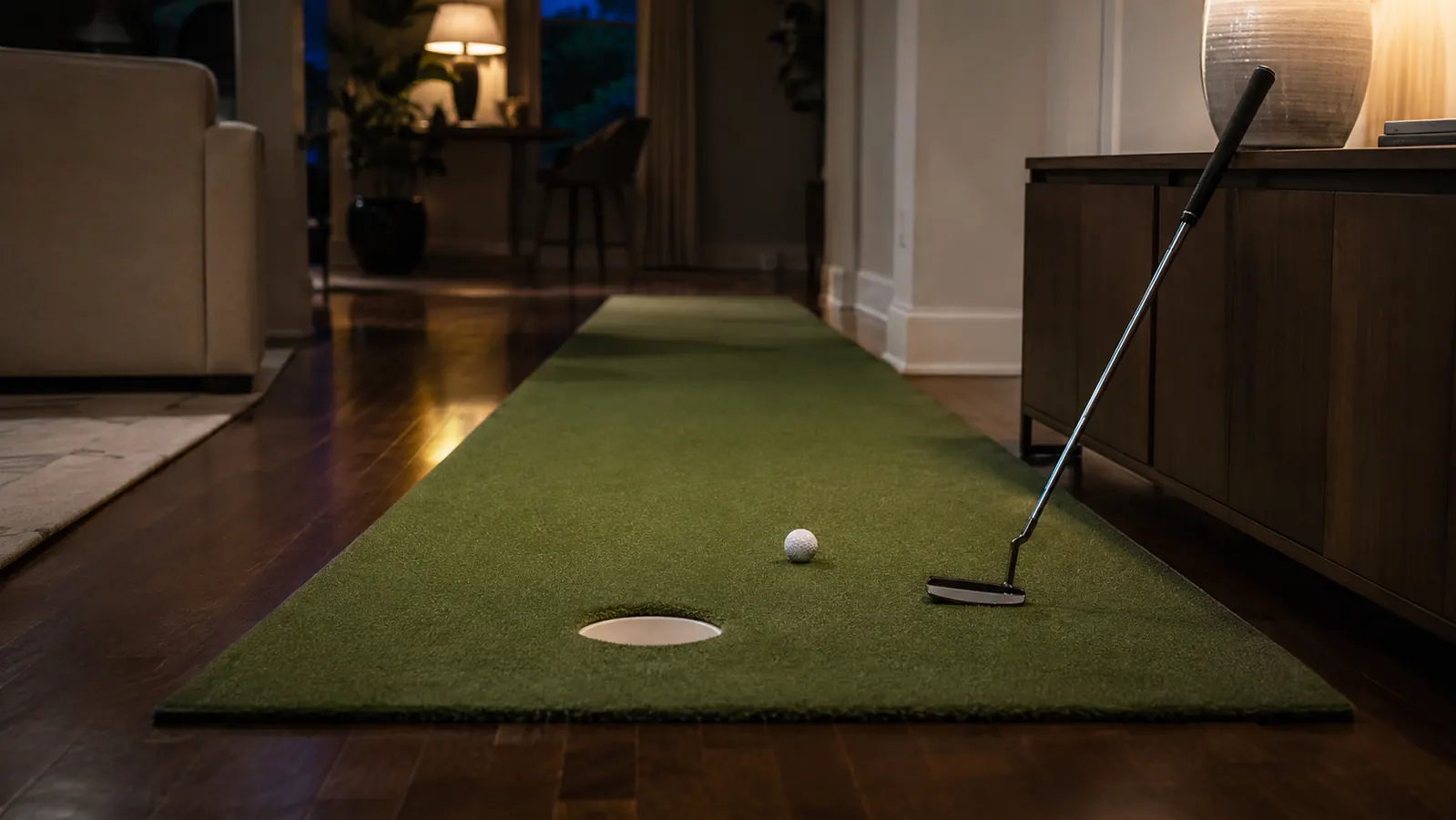
I set the SKLZ green up in a spare bedroom and left it out permanently, because the whole point was removing friction. If I had to roll it up and store it every night, I would have quit by week two. Lying flat on the floor it gives you a straight, uniform putting lane, which sounds simple but is actually the most useful thing a home practice surface can give you. For the last three months I have spent ten to fifteen minutes on it every evening, usually while the game I have on in the background runs through its halftime.
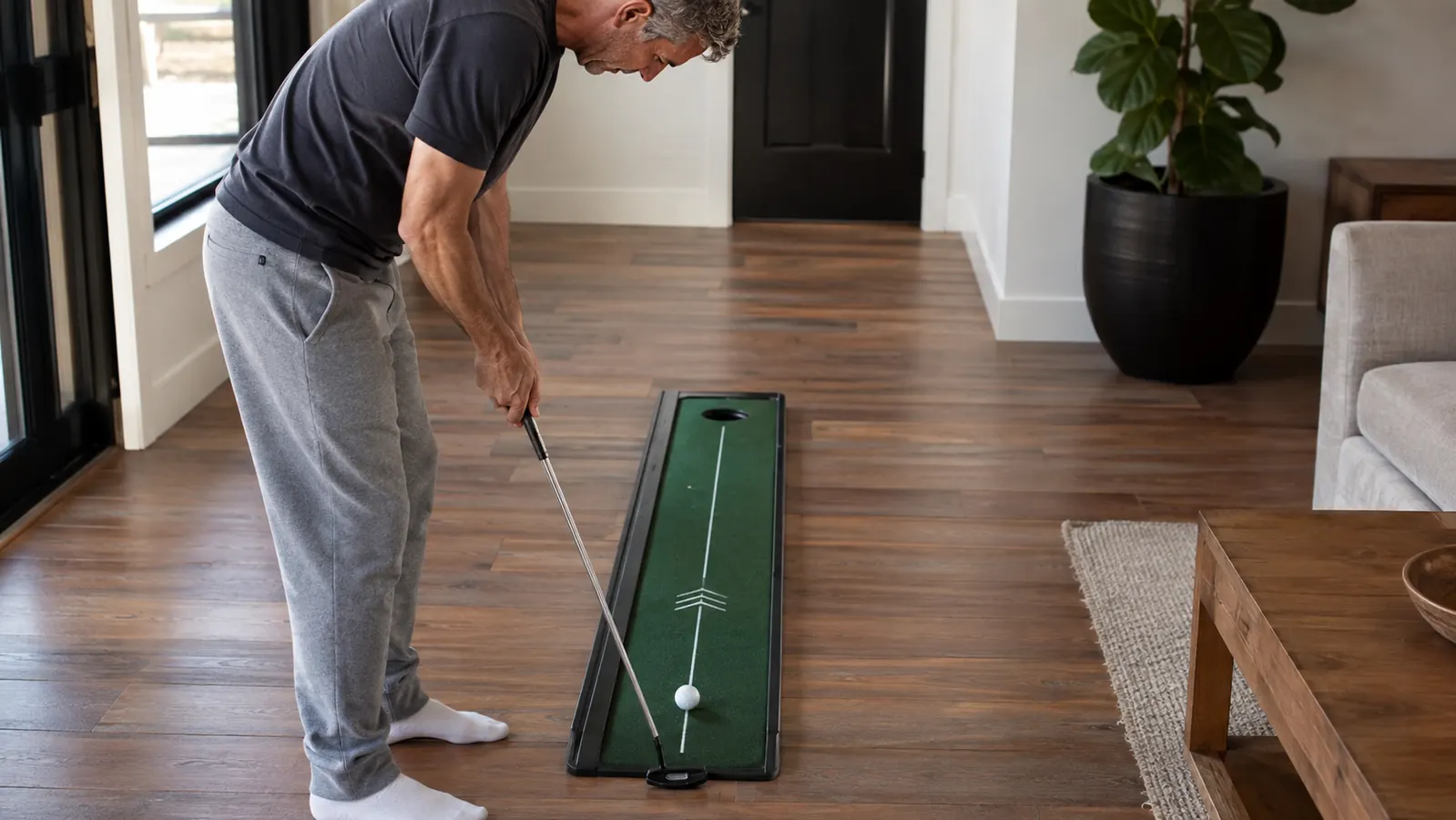
My routine is not complicated, and that is deliberate. I start with lag drills, trying to leave every ball within a putter-length of the far cup or return line, then I move to short ones where I force myself to make ten in a row from the same spot before I let myself move on. The strip's printed alignment aid is genuinely useful for checking that my putter face is square at setup, and the speed is consistent enough that I can feel when I have drifted away from my normal tempo. It is not course-realistic speed, and I will talk about that honestly in a moment, but it is repeatable, and repeatability is what practice is for.
I also use it for boredom-proofing. The single most common reason a mid-handicap golfer stops practicing putting is that it feels pointless on a flat surface, like you are just watching balls do the same thing over and over. What I have learned is that the point is not simulating the course at all. It is getting your hands to a place where they do the same thing every time, so that on an actual green the only variable left is reading the slope. That separation, between stroke and read, is the whole game, and this mat is built exactly for the stroke half of it.
The Core Question: Does the Flat Surface Translate to the Course?
This is the honest heart of any home putting green review, and I want to give it to you straight. A flat, fast, uniform strip will make your putting look beautiful at home. The balls will roll on line, the short ones will drop, and you will feel like a different player. Then you get to a real green with a two-percent tilt and a grain you can feel, and the first putt can roll straight past the hole. That disappointment is real, and I felt it early too.
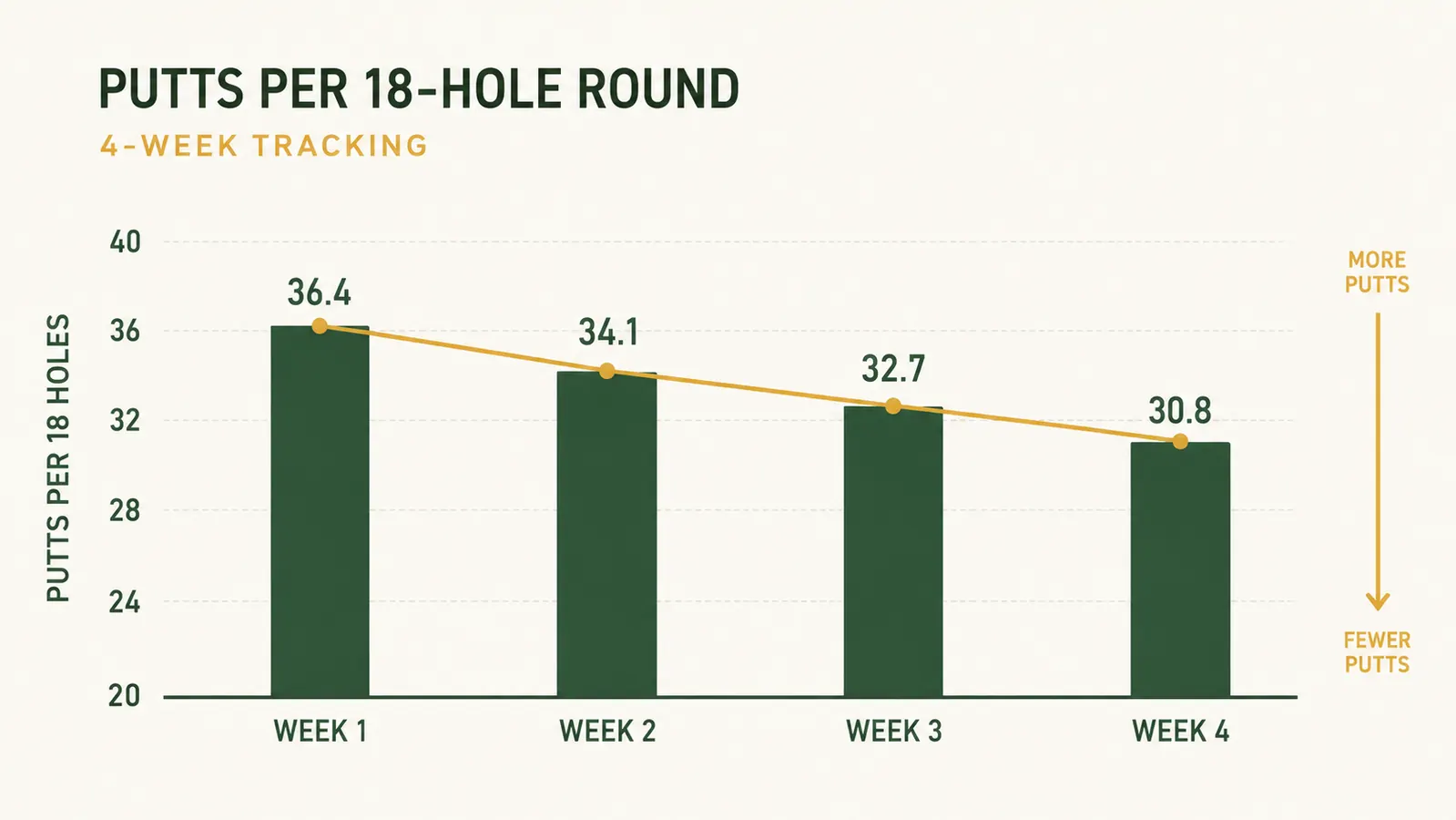
But here is what actually happened over a season. Once my stroke became repeatable at home, my misses on the course got smaller, and smaller misses are easier to convert. I started leaving the ball inside the two-foot circle far more often because my start line was consistent and my distance came back the same every night. The skill the SKLZ green builds is a trustworthy putter face and a trustworthy touch, and those two things transfer directly. What it does not build is green reading, and that is simply not its job, so do not ask it to do that.
The gap in translation mostly showed up in my legs, or rather the lack of them. On a real putting surface you are standing on the ground and the slope is under your feet, so your body is constantly adjusting. On a flat mat there is no slope to read and no weight shift to make, which is exactly why it is a good place to groove the stroke. But it is why you should never judge your whole putting game from what you look like on this green. The mat is a stroke tool, not a simulation tool, and treating it like the latter is the fastest road to false confidence.
What It Does Well
The speed and durability are the headline. After months of daily use, mine shows almost no wear. The textured surface still rolls smoothly, and the drilled cup and return line still behave exactly as they did on day one. That durability is the difference between a one-week novelty and a permanent practice tool, and the SKLZ green is firmly in the latter camp. I have had cheap practice aids that started to sound and feel cheap within a month, and this is nowhere near that category.
It is also genuinely portable, which I did not appreciate until I packed it for a cottage weekend and realized I could keep my stroke sharp without a course nearby. A golf trip where you are not going to get much practice time the first day becomes a chance to keep your hands honest instead of a lost week. For a recorder of my bad habits, days off were where the rust set in, and the portability of this mat closes that gap.
I also rate the built-in alignment aids higher than I expected. Almost every mat on the market has printed lines, but the ones here are easy to read at a glance and I actually use them. They let me check setup before every drill, and that constant feedback is the single biggest reason my start line improved. When your practice gives you immediate, honest feedback about whether the face was square, you improve fast, and this green is very good at that sort of feedback specifically.
The SKLZ putting green does not fix your reads. It fixes the part of putting you can actually practice on a flat surface, which is more than most weekend golfers ever practice at all.
What I Liked
- Durable textured surface that holds up to nightly use
- Flat, uniform lane that grooves a repeatable stroke
- Printed alignment aids give honest face-square feedback
- Portable enough to keep your stroke sharp on a trip
- Simple enough to actually use every night, which is the whole point
Where It Falls Short
- Surface rolls faster and flatter than most real greens
- Teaches you nothing about reading break or slope
- Needs to be left lying flat to work properly
- Slower to translate into raw score than a mat's cost implies
Where It Comes Up Short
The honesty requires the cons, and there are real ones. First, the surface speed is not like your course. It is faster and flatter, and most greens, especially the public-course greens most of us play on, are slower and grainier. When I first went back out after a winter of nightly reps, I was leaving putts short because I had calibrated my touch to the mat's speed. It took a few rounds to re-adjust, and that is a real friction point worth knowing about before you buy. You are not practicing your exact course speed here, you are practicing a clean, repeatable move.
Second, the flat strip teaches you nothing about break. All the slope and grain reading that makes real putting hard is completely absent. If your biggest problem on the course is missing the read, this green will not touch it, and no matter how many putts you roll you will still walk into a five-footer with a foot of break as blind as before.
Third, it wants to lie flat to work properly. If you are planning to wedge it into a corner that is not level, or fold it up between each use, you will not get the consistent roll that makes it worth owning. It rewards being left out and set up once. This is more a lifestyle requirement than a product flaw, but it is a real consideration if you are short on floor space or share the room with a dog that thinks the strip is a wrestling mat. My plan called for the spare bedroom and that was the right call.
Alternatives I Considered
I looked at the separate cup-attachment trainers that add a ball-return and a track, and I seriously considered one because returning your own balls is half the friction of home practice. There is a trade-off there, and I weighed it honestly. The SKLZ green is the simplest, most direct version of the idea, a pure flat practice lane. A cup-attachment style rig adds more to chase after for your stroke but is a different, more involved setup with parts that can wear out or stand up on their own.
For my purposes, managing the balls myself was a small price for the cleanest possible flat practice surface, and I have not regretted the trade. If you read that and think the ball-return would be the thing that kept you practicing, then you should get the version that keeps you practicing, because the best practice tool is the one you will actually use every night. My test was pure simplicity, and the SKLZ green won that test.
If you already have a putting green gathering dust, the problem is probably not the green, it is that you are not getting enough feedback to keep practice feeling like it is worth it. The reason the SKLZ green changed my habits is that it is simple enough to actually use every night, with just enough equipment that my hands always had a target to roll at. Fancy does not make you practice, convenience does.
One Thing I Wish I'd Been Told Up Front
If I could go back and give my pre-purchase self one piece of advice, it is this: the first two weeks will not show up in your score at all, and you need to be ready for that. A putting stroke takes time to rebuild, and a mat only makes the reps convenient, it does not make them fast. If you are the kind of player who wants results by Saturday, you will feel like the mat is a waste by week two and you will quit. It is not a waste, it is a compounding investment, and the payoff shows up around week six, not week two.
The second thing I wish I had known is that you should commit to a specific drill every single night, even a boring one, rather than just rolling putts until you get tired. Undirected practice on any flat surface will groove bad habits as fast as good ones. Using the alignment aids with a set routine, the same ten-short-putts drill every night, is what actually moved my numbers. The mat is honest, but it only reflects back what you feed it.
Who This Is For
This is for the ordinary mid-handicap golfer who three-puts too much, does not have time to stand at the practice green every day, and wants a way to grind strokes in the evening at home. If your start line wanders and your distance control is unreliable, and you are willing to roll a few hundred putts a week on a flat strip, this green will quietly take strokes off your card. It is ideal for anyone whose limitation is time and consistency rather than feel, and that describes most of the people reading this.
It is especially good for the player who has already tried the expensive route thoughtlessly. I know golfers who book a lesson for every swing flaw and never practice the twenty feet in front of the hole. A season of nightly reps on this mat is cheaper than one lesson and it targets the one part of the game that literally every scorecard counts twice. That value proposition is hard to argue with.
Who Should Skip It
Skip it if your putting problem is reading greens rather than starting putts online. No flat practice surface will help you see break, and you would be better served by lessons on a real green. Skip it too if you have nowhere to leave it lying flat, because the whole value depends on a consistent position and a consistent surface, and the moment you start folding it up it will stop being used.
And skip it if you expect a home green to feel exactly like your home course, because it will not. Buy it for the rep-count and for the honest feedback on your stroke, not for simulation, and you will not be disappointed. If you go in expecting a faithful replica of your local greens, you will blame the product for what is actually a limitation of the entire flat-mat category.
Give your putting a floor to get better on
A flat, durable, set-and-forget practice strip is the cheapest way to add real reps to your week. It has been the highest-return golf purchase I have made all season.
Amazon Check Today's Price on Amazon →