
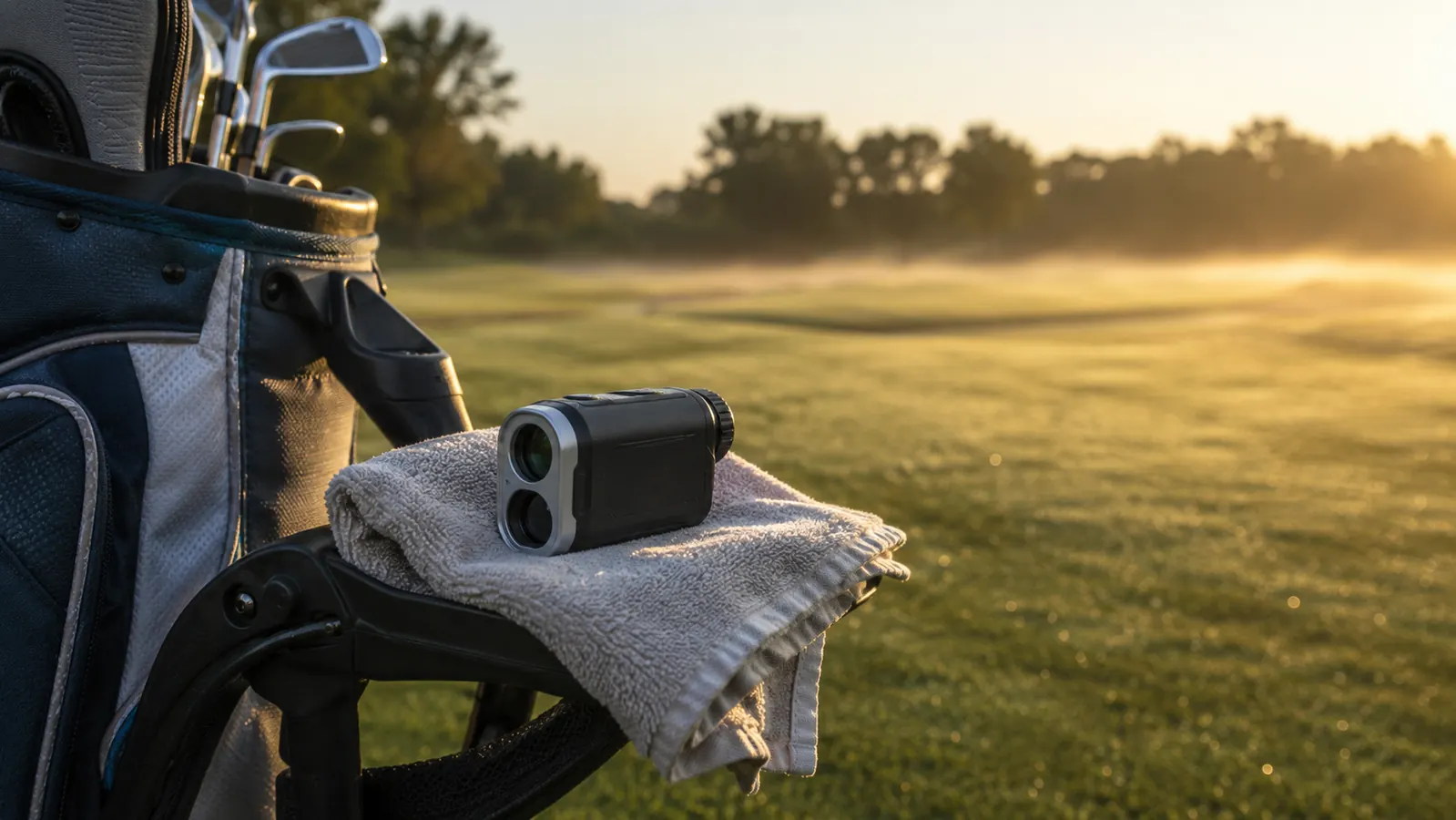
Every par-3 used to be a coin flip for me. The sprinkler head said 152 to the middle, the flag was tucked front-right behind the bunker, and I would stand over a 7-iron hoping the ball settled anywhere on the putting surface. Eighteen months ago I stopped hoping and started pointing a Callaway 300 Pro at the pin, and nothing else I have bought in the last decade changed my scoring the way that did. This review is the long version of that claim: what it has cost me, what it has paid back, and the honest places it falls short.
I am Marcus, 47, self-employed, and my handicap has bounced between 13 and 15 for most of my adult life. I get out twice a week in season and try to put in range time on Saturdays when the afternoon opens up. I follow football the way a lot of guys my age do, which means Sunday afternoons run long and the remote stays on my side of the couch. None of that makes me a gear expert. It makes me the exact guy this rangefinder is aimed at, and that is why I wanted to write this down: a normal recreational golfer, sixty rounds and eighteen months, no launch monitor, no team of testers, just the scorecard. I bought it partly out of frustration with a GPS watch that only gave me middle-of-the-green numbers, and partly because my foursome was tired of watching me pace off a yardage I already owned.
The Quick Verdict
After 18 months and 60 rounds it is still the busiest club in my bag. It quietly cut about three strokes a round by replacing guesses with real numbers, and the only genuine gripes are a flimsy case and a wobble in bright sun.
Amazon Check Today's Price →The rangefinder that ended my yardage gambling
If you have never lasered the exact number before pulling a club, you do not know how much guesswork you were carrying. Check today's price on the Callaway 300 Pro and see what eighteen months of exact numbers did for my card.
Amazon Check Today's Price on Amazon →How I've Used It
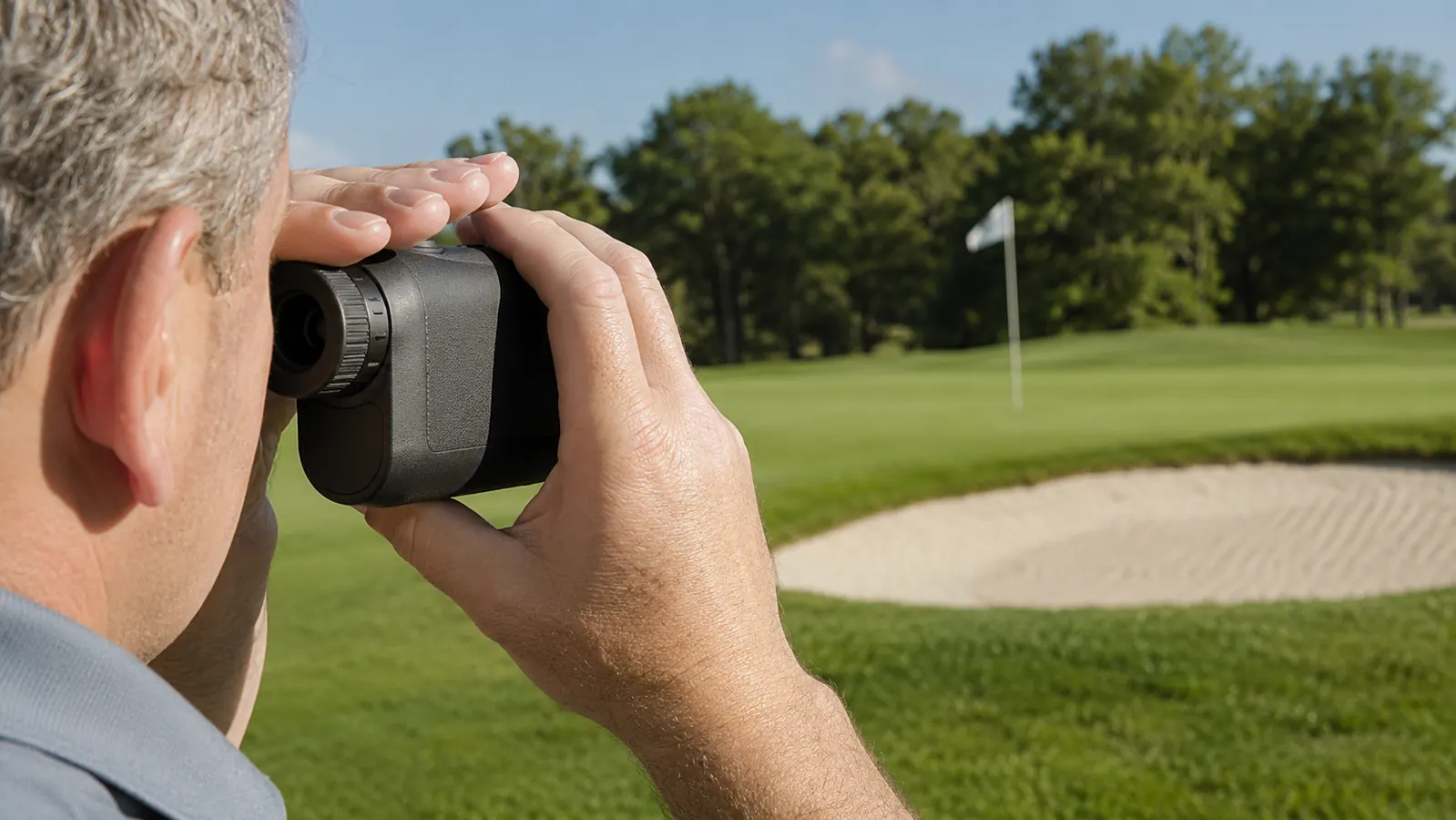
The 300 Pro has lived in my bag since March of last year, and it is the last thing I zip up before a round and the first thing I reach for on the tee. I use it on every par-3, every approach I can see, and most tee shots on doglegs where the fairway number changes with the corner. It reads in about two seconds on a normal day, and it gives a short vibration once it locks onto the flag, so I do not have to squint to know I measured the pin and not the tree line behind it.
I keep the slope switch on for practice rounds and casual weekend golf, because knowing the uphill number is genuinely useful when I play the same course from the same tees every week. For our Wednesday league I flip it off, because the local rules there do not allow slope-adjusted numbers in competition. The switch is on the outside of the housing where I can see it, so I know exactly what mode I am in without reading anything. That sounds small until you have played with a guy who spends three minutes in a menu system trying to undo his own setting.
The battery lasted the whole first season, and I only changed it in the spring out of caution rather than need. There is a magnet on the side that holds the unit to the cart rail, which matters more than you would think on a course where you push a cart through rough between fairways. The lanyard is standard, which means it is fine, and I keep it attached on walking days.
What the Slope Switch Really Buys You
Slope is the thing that makes people overthink a rangefinder, so let me be plain about it. When slope is on, the 300 Pro measures the line-of-sight distance and then does the math for the angle of the shot, giving you a playing number instead of a measured one. On my home course the fourth hole plays uphill to a green about twelve feet above the fairway. On a level day that is a full club between my 7-iron and my 8, and the difference shows up in whether I am left with a makeable look or a chip from the bank. The 300 Pro does not judge the angle for me or tell me how to play the shot, it just hands me the number the math says, and I find that more useful than a gadget that tries to be smarter than I am.
The point of an external switch is that you can see your setting at a glance and flip it before a round that does not allow slope. Some units bury that choice in a menu, which is how a guy ends up disqualified at a charity event. A lever you can reach without reading the manual is the whole reason this feature never becomes a problem.
And I will say plainly that the vibration lock is the feature I would never trade. When the unit shakes in my hand, it is telling me the number belongs to the flag. Without that confirmation I spend ten extra seconds deciding whether I measured the pin or the trees behind it, and ten seconds on every approach adds up to a lot of hesitating by the time you reach the clubhouse.
The Three Strokes a Round, Named by Name
I have been telling my foursome that this rangefinder is worth three strokes a round for long enough that they finally asked me to show the work. So here it is. It did not shave a shot off every hole. It removed three specific kinds of mistakes that used to show up on my card every single week.
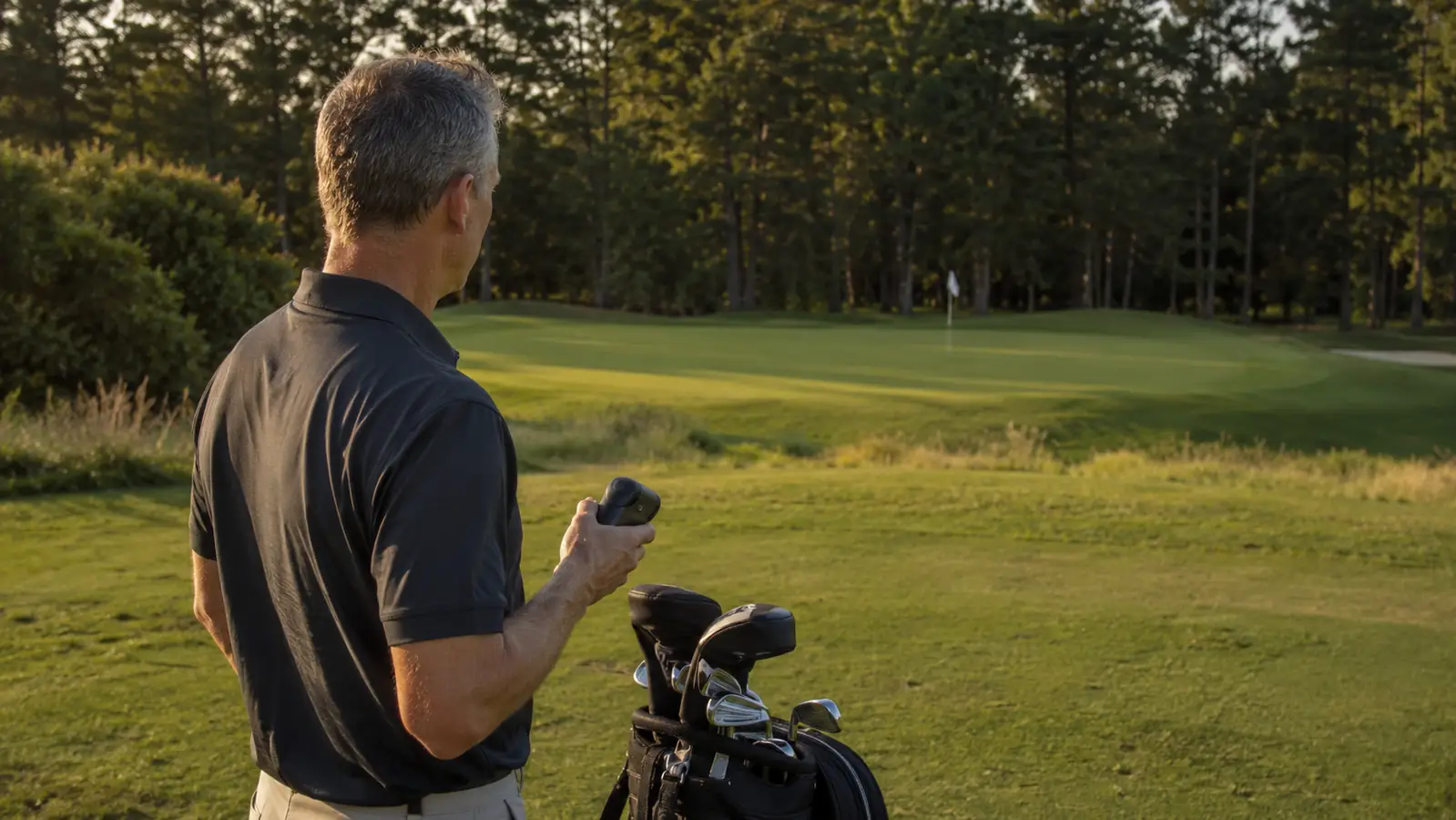
The first is par-3 scoring. I used to aim for the middle of the green and two-putt from everywhere, or worse, leave myself short of the flag and face a chip that ends up twenty feet past. Now I take dead aim at the flag position and select the club for the number in my hand. Eighteen approach shots a round is eighteen swings played with a real number instead of a hope, and greens hit in regulation went from three or four per round to six or seven.
The second mistake was flying greens. The classic amateur habit is being between clubs and deciding to take one more, then sailing the ball over the back edge and into a trap that nobody is happy with. With a yardage I actually trust, the club choice is made before the ball is teed, and I land inside the flag-side half of the green far more often than I used to. That single change accounts for a big share of the three strokes all by itself.
The third is pin location. Front, middle, and back pins are not the same golf shot from 170 yards, but I used to treat them as if they were. Now the number tells me exactly where the flag sits, and I take the club for that location. The honest caveat is that none of this fixes a bad swing or a bad putt. It fixes the information problem, and for a mid-handicap player that was the cheaper problem to solve.
The honest net of all three is that my scoring moved from the mid-to-high 80s to the low 80s over the season, with a couple of days where everything clicked. I will not pretend that eighteen months of better numbers is not also eighteen months of more golf. The winter was short and the league schedule did me no favors, so I am not going to claim a steady line of improvement. But the trend is real, and it matches the month I started trusting the numbers. This is also the one piece of gear I can point at and say it earned its place, which I cannot say for half the putters in my garage.
What It Changed About My Practice Routine
The less obvious payoff showed up on the range. Knowing my real carry distances, measured on flat ground with the slope switch off, fixed a problem I did not know I had. I had been grabbing my 6-iron for 160 when the ball in my hand was really a 155 club, which meant every course played nine yards longer than it needed to. A Saturday afternoon of lasering every club until the numbers stopped changing turned my bag into a set of known quantities. I wrote the results on a card that lives in my back pocket, and I update it twice a season. Ten minutes of work, and the question at every approach shot stopped being which club and became where to miss.
That is the part nobody puts on the box. The rangefinder is not just a course tool. It is a calibration tool for your own swing, and for a recreational golfer that is where the real lasting gain lives. My yardage gaps are not perfect, but they are mine, and they are real, and every club decision since then takes about five seconds less.
Where It Falls Short
Now the part I wish someone had told me before I bought it. On bright days the number wobbles around the flag for a moment before it settles, and I have to hold the unit steady with both hands to keep the reticle where I want it. It is a small thing, and my previous rangefinder did the same, so I cannot pretend this model invented the problem. But if your hands shake the way mine do after a fourth cup of coffee, give yourself an extra beat before you trust the reading.
The included case is thin, and there is no hard cover for the lens. I have been careful to snap the rubber cap on after every shot, and I have still dropped the whole unit twice on cart paths, more by luck than by design. The glass has stayed clean so far. If you are the type who throws things in the trunk loose, budget for a better case.
It also loses ground in fog and when a low winter sun sits directly behind the flag. Every laser rangefinder does this, but expectations matter. This is a tool for a normal Saturday, not a magic wand for a November coastal morning, and anyone who tells you otherwise is selling you something.
What I Liked
- External slope switch you can see and flip without menus, so competition rounds stay legal without stress
- Vibration tells you the flag is locked, so you trust the number without squinting
- A full season of reliable readings on a single battery
- Reads fast enough that I actually use it on every hole, which is the whole point
Where It Falls Short
- Included case is thin, and there is no hard lens cover
- Lock wobbles for a beat in bright sunlight
- Struggles in fog and low light, like every laser on the market
- It does not hit the shot for you, so a bad swing still scores like a bad swing
Fourteen greens in regulation in a July stretch was not a swing change. It was eighteen par-3s and approaches played with a number instead of a hope.
Alternatives I Considered
The comparison everyone wants is Bushnell, and I wrote that head-to-head separately because it deserves its own space. The short version: Bushnell makes superb units and their lock is the benchmark, but you pay a premium for the name and for a slope algorithm a mid-handicap player will not feel the difference on. For a recreational golfer the Callaway covers the same job for a far more sensible buy, and I said so in the comparison article, which walks through the same courses with both units in hand, including the holes where Bushnell genuinely won.
Before this unit I owned a cheap no-name laser with a short range and no lock confirmation at all. It lied to me just often enough that I stopped trusting it, and a rangefinder you do not trust because it gives you bad numbers is worse than no rangefinder. The money I wasted on that unit would have nearly covered this one, which is the real argument for buying the right tool the first time.
Who This Is For
Buy the Callaway 300 Pro if you are a weekend golfer who is tired of guessing, if you play one home course and want the same reliable number every week, or if you want slope in practice and a switch you can honestly turn off for league play. It is also the right buy if you are the kind of player who will keep it in your hand every hole. That last one is the real filter. This is a tool you live with, not a gadget you pull out at the turn to impress the group, and it rewards the golfer who actually uses it.
Who Should Skip It
Skip it if you play a handful of charity scrambles a year and mostly ride in a cart, because a rangefinder earns its keep through repetition and you will get more value from a dozen balls or a book of lessons. I am not knocking the occasional relaxed round with a cold drink, I just think this tool finds its purpose on a course where you walk and you actually care about the number. Skip it if you are a high-swing-speed player chasing tenths of a yard, because you will want a unit with more magnification and a bigger warranty, and you should pay for that. And be honest with yourself about the last yardage device you bought and whether it is still in a drawer. If it is, this one may end up there too. That is not the fault of the product, but it is a real reason not to buy it.
The tool I trust with money on my card
No rangefinder fixes your swing, but this one stops you from standing over a shot and hoping the number is close. If that sounds like your round, check today's price on the Callaway 300 Pro before your next tee time.
Amazon Check Today's Price on Amazon →