

I'll be honest with you: for ten years I blamed my irons for shots that were never the club's fault. I would stand over a 9-iron, give it the swing I had been working on all winter, and watch the ball settle thirty feet short of the pin. Then I would walk off muttering about tempo. I did this for a decade, convinced the fix was more practice. And then, on the tenth tee one Saturday, a friend who plays to a better handicap than I ever will handed me his Callaway 300 Pro and told me to stop being stubborn.
My numbers were a mess. I paced off the distance from the fairway marker, added a few yards for the uphill in my head, rounded up when I felt strong and down when the wind was blowing, which is just four different guesses stacked on top of each other. Some Saturdays I played great anyway, because guessing right a few times in a row looks a lot like skill. But the days the guess went wrong, I blamed everything except the guess itself. I blamed the ball. I blamed my grip. I even blamed the defense of the football team I watched the night before, and I am only half joking.
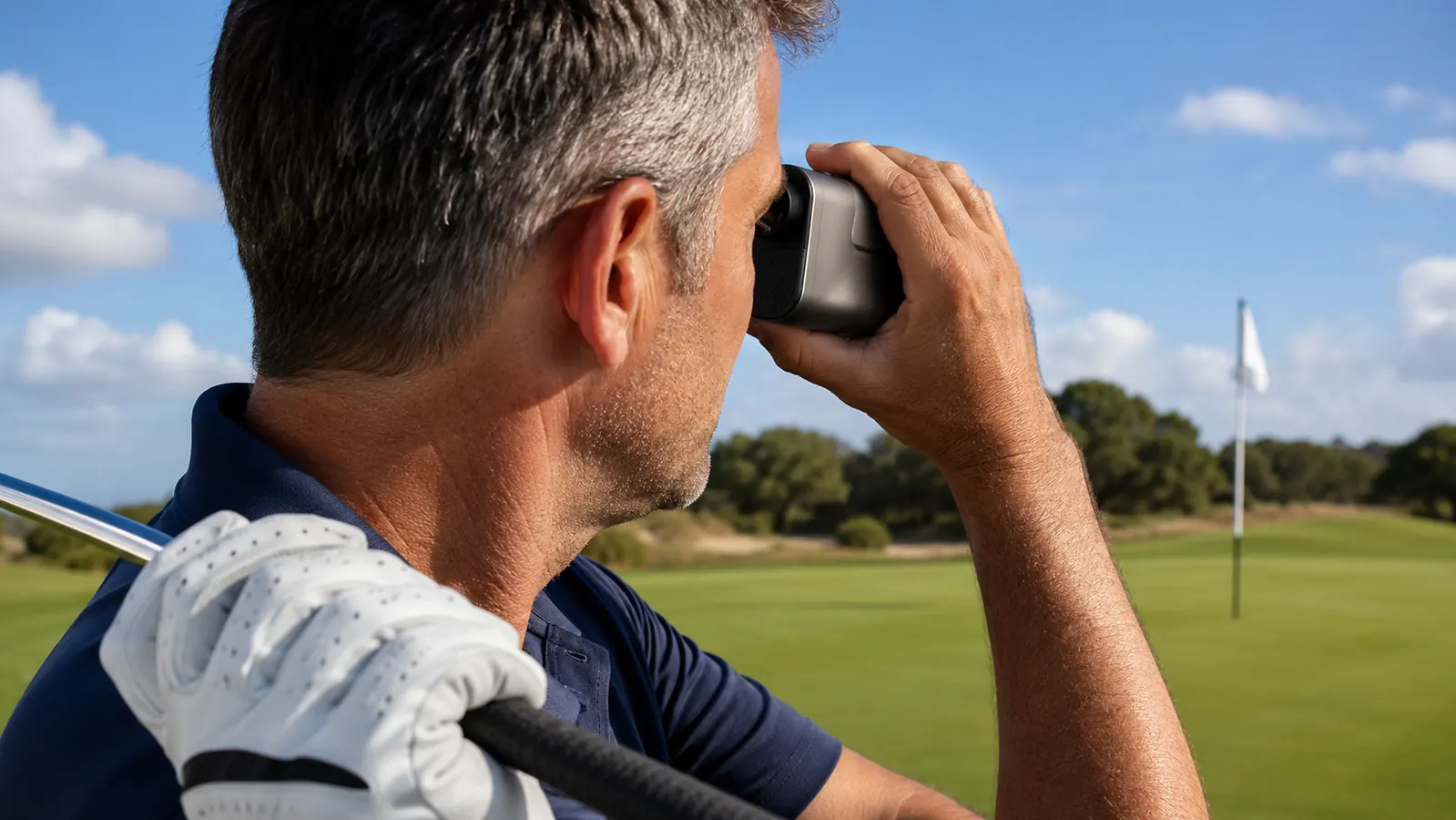
One real number, he said. I pointed the device at the pin, the display settled, and it read 162 yards. My gut had said 150, and that twelve-yard lie was sitting between me and every green on the course. I hit the 162 club, dropped it to ten feet, and stood there annoyed at how easy it was. Being wrong never felt so expensive, because that miss had been costing me a stroke a hole for years.
I bought my own Callaway the next week. Not because I am a gear guy, I despise paying extra for logos and the newest thing. Because the first time I trusted a laser instead of my instincts, I hit a better shot than my instincts had ever produced on their own. That one moment paid for the device on the spot, and a full season later it is still the most used thing in my bag after the putter.
Here is what surprised me about the whole season: the rangefinder did not change my swing at all. It changed the number I built the swing around. The same swing, handed a truthful distance, started finishing pin-high. Approach shots that used to funnel short of the flag started landing past it more often than not. That matters more than it sounds. Most weekend players leave approach shots short because they guess short, out of fear of flying the green, and then they spend the next shot chipping from the fringe.
I will also tell you what it did not do, because that is the part the ads skip. It did not fix my driver. It will not help on the two rounds a month my short game goes missing. Slope mode, which I use every Sunday on the hilly course down the road, adds or subtracts a couple of yards on uphill and downhill lies, and it is genuinely handy, but it does not read wind and it cannot tell you which club to hit when your backswing has left the building. It stopped me from lying to myself about distance. That was the whole job, and it was enough.
The rangefinder did not change my swing. It changed the number I built the swing around.
The number you are missing may be the whole problem.
The Callaway 300 Pro locks onto the flag fast, reads slope when you need it, and feels like it belongs in your hand. If you have been blaming your hands for a yardage problem, this is the honest fix. Check today's price on Amazon.
Amazon Check Today's Price on Amazon →
The bigger change was routine. Every hole now starts the same way: walk to the ball, laser the flag, pick the club, commit. The pre-shot ritual that used to take forty frantic seconds of guesswork now takes about eight. Golfers pay a lot of money for ways to simplify the game. This is the cheapest version of it I have found, short of shoving my hands in my pockets and counting to ten.
I have owned yardage apps and shared the course with players who trust them. They are fine until the pin is tucked and the green drains away from you, which is most of the time on a course you have not played a hundred times. The Callaway cuts through all of that. It gives the same answer at eight in the morning in the mist as it does at high noon, and it does not care how tired or how angry I am. There is a real quiet that comes with a number you can trust.
Here is the truth-in-advertising part. A rangefinder will not lower your score by itself just because it is in your hand. What it does is stop you from giving strokes away to a bad guess, and for a mid-handicap player losing three or four shots a round to bad yardage, that is a swing in your scoring worth more than any wedge you will buy this year.
What I'd Tell You If We Were Sitting at My Kitchen Table
Buy the Callaway when you can, but buy the habit first. A rangefinder only pays you back if you actually point it at the flag on every hole, even the ones where the distance feels obvious, and you use it for a month before you judge it. If you have ever walked off a green wondering how a perfect swing came up short, the problem may not be your swing. It may be the number you built the swing around. That is what I would tell you across the table, and it is free.
Stop guessing. Start trusting the number.
One honest yardage per shot has changed my rounds more than a year of lessons, and it can do the same for yours. Check today's price on the Callaway 300 Pro on Amazon.
Amazon Check Today's Price on Amazon →